
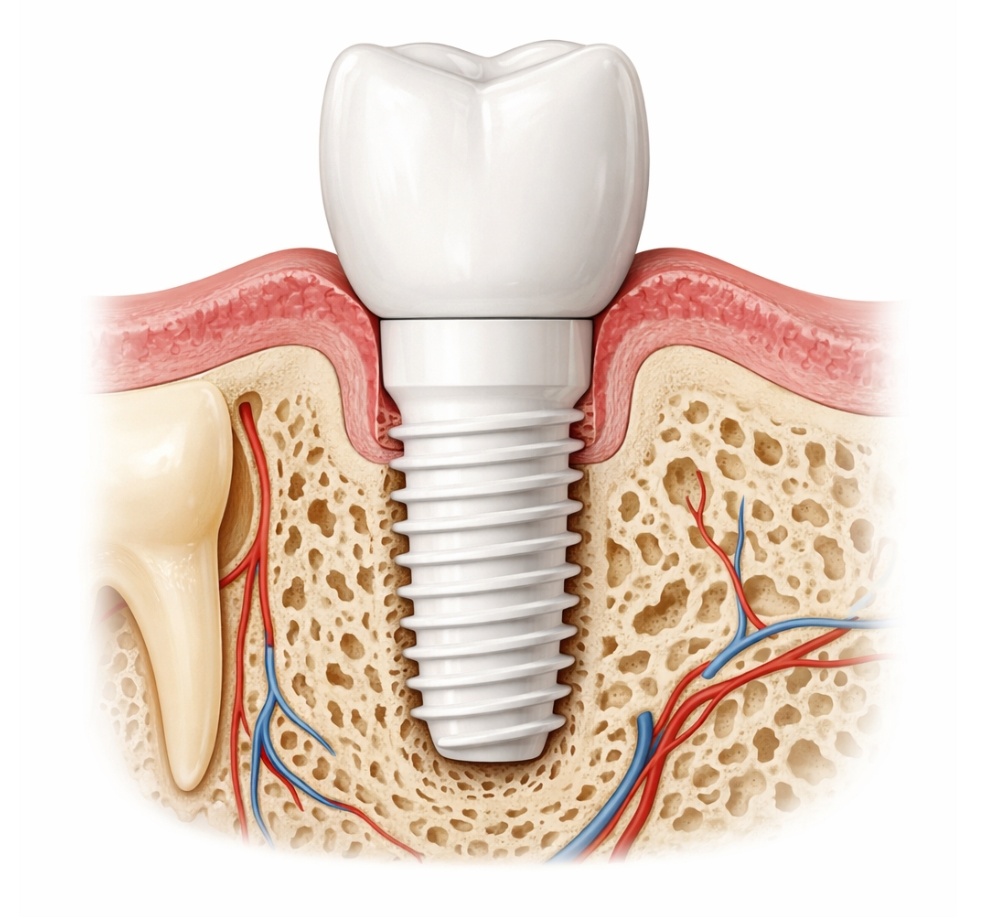

Dental implants have transformed the way missing teeth are replaced, offering a stable and long-lasting solution that closely mimics natural teeth. For many years, titanium implants have been considered the standard option. More recently, ceramic dental implants have gained attention, particularly among patients looking for metal-free or biologically neutral alternatives. This growing interest has raised an important question about whether ceramic implants are actually safer than titanium.
Understanding Ceramic Dental Implants
Ceramic dental implants are most commonly made from zirconia, a high-strength ceramic material used in various medical applications. Zirconia is known for its excellent compatibility with human tissue and its resistance to corrosion. Because it is non-metallic, it does not release metal ions or react chemically within the body, which appeals to patients who prefer a more natural approach to dental treatment.
These implants function in the same way as traditional implants, serving as artificial tooth roots that support crowns or other restorations. Their design continues to evolve as technology improves, making them a more common option in modern dentistry.
How Titanium Dental Implants Perform
Titanium dental implants have been used successfully for decades and remain one of the most researched materials in dental care. Their main advantage lies in their ability to bond directly with the jawbone through a process known as osseointegration. This creates a strong and stable foundation that can support chewing forces over many years.
For the majority of patients, titanium implants are well tolerated and provide predictable, long-term results. Their long clinical history gives dentists confidence in their performance across a wide range of cases.
Safety and Biocompatibility Considerations
When patients ask about safety, biocompatibility is often at the center of the discussion. Ceramic implants are chemically inert, meaning they tend to cause very little reaction from surrounding tissues. This can be reassuring for individuals with metal sensitivities or autoimmune concerns, as the material remains stable and non-reactive over time.
Titanium is also highly biocompatible and safe for most people. True allergic reactions are rare, but some patients prefer to avoid metal entirely. In those cases, ceramic implants may feel like a safer or more comfortable choice, even though titanium is widely accepted as safe.
Aesthetic Differences Between Ceramic and Titanium
Appearance plays an important role in how patients evaluate implant options. Ceramic implants are naturally white, which can blend more seamlessly with the tooth and gum structure. This can be especially beneficial for patients with thin or receding gums, where darker materials may become visible over time.
Titanium implants are gray and typically remain hidden beneath the gums. However, in highly visible areas of the mouth, aesthetic concerns may influence the choice of material.
Long-Term Strength and Reliability
Titanium implants have a proven track record supported by decades of clinical data. They are known for their strength, durability, and versatility, making them suitable for both simple and complex restorations.
Ceramic implants are newer, but modern zirconia designs have significantly improved in strength and fracture resistance. While long-term data is still developing, current research suggests that ceramic implants can perform reliably when placed in appropriate conditions and carefully planned cases.
Are Ceramic Implants Truly Safer?
Rather than being universally safer, ceramic dental implants are best viewed as a safer alternative for certain patients. Those with metal sensitivities, strong aesthetic priorities, or a preference for metal-free treatments may feel more comfortable choosing ceramic implants. For others, especially patients requiring more complex restorations, titanium implants may offer greater flexibility and predictability.
Both ceramic and titanium dental implants are considered safe and effective solutions for replacing missing teeth. The choice between them depends on individual health factors, aesthetic goals, and professional assessment. By understanding how each material works and what it offers, patients can make informed decisions that support long-term comfort, confidence, and oral health.