

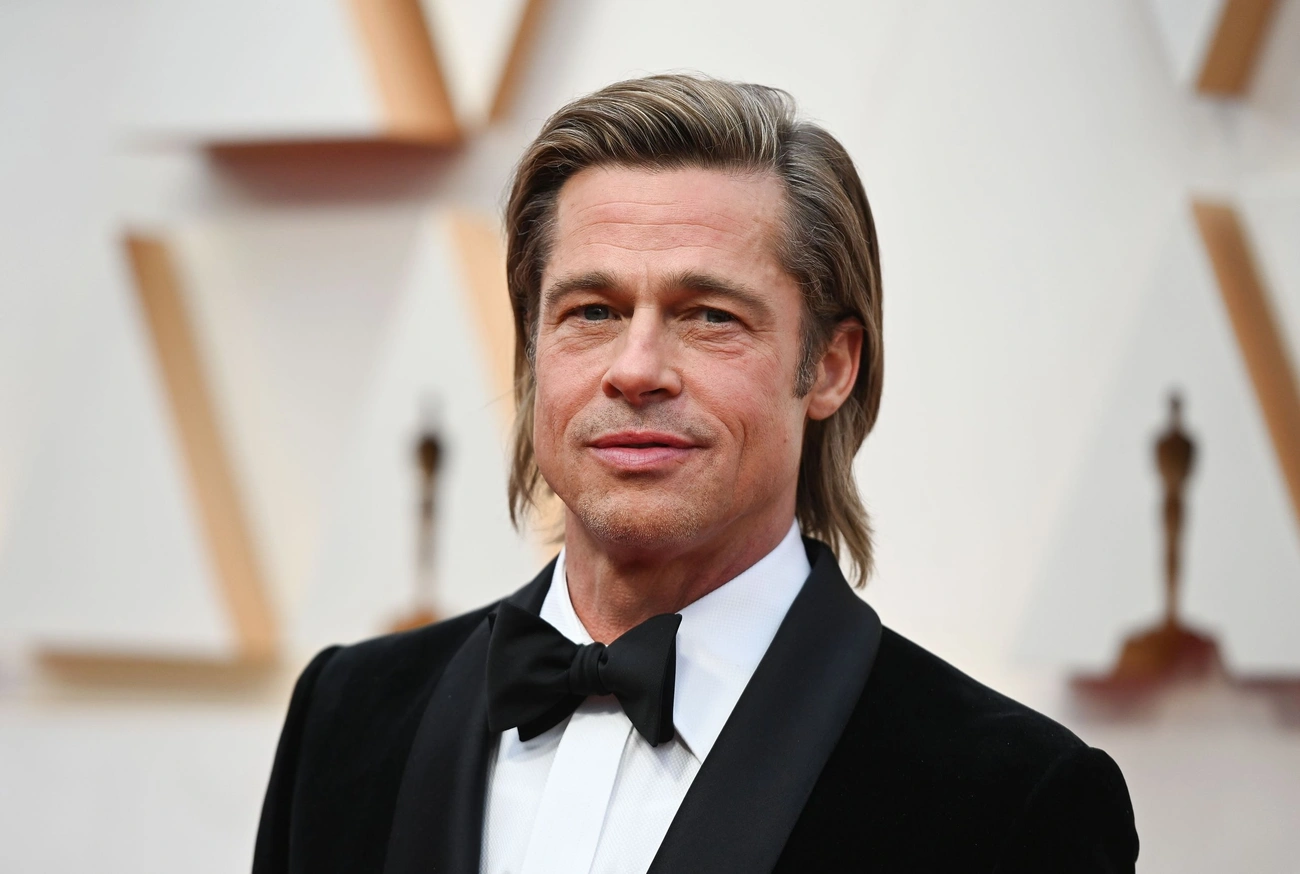

Brad Pitt stands as one of Hollywood’s most influential actors, with films that have grossed over $7.5 billion worldwide. His remarkable career spans decades and includes two Academy Awards, two British Academy Film Awards, two Golden Globe Awards, and two Primetime Emmy Awards.
The story begins in 1987 when a 23-year-old Pitt first stepped into Hollywood. His breakthrough came as a charismatic cowboy hitchhiker in Thelma & Louise (1991). Pitt’s progress from heartthrob to serious actor shows in critically acclaimed films like Seven (1995) and Interview with the Vampire (1994). His performance in Once Upon a Time in Hollywood (2019) earned him an Oscar. World War Z (2013) became his most successful leading role, grossing $540 million worldwide. This piece reveals the untold story of how a young man from Missouri revolutionized cinema and became one of its most enduring icons.
Early Life and the Spark of Ambition
Brad Pitt’s American story began in Shawnee, Oklahoma, born on December 18, 1963. His parents, William Alvin Pitt and Jane Etta Hillhouse, met as students at Oklahoma Baptist University. His father later owned a trucking company while his mother worked as a school counselor.
Family background and upbringing in Missouri
The Pitts moved to Tulsa right after Brad’s birth and eventually made their home in Springfield, Missouri. Brad grew up with his younger siblings – Doug (born 1966) and Julie (born 1969). He remembers his childhood surroundings as “Mark Twain country, Jesse James country,” with its distinctive “lot of hills, lot of lakes”.
“Springfield, Missouri is a big place now, but we grew up surrounded by cornfields,” he shared with GQ. “Ten minutes outside of town, you start getting into forests and rivers and the Ozark mountains, stunning country”.
A conservative Christian household shaped Brad’s early years, with Southern Baptist values at its core. His dad’s influence left a lasting mark. Brad later revealed his father was “very, very tough” and raised them “with all the Christian guilt about what you should and shouldn’t do”. His father’s teachings about independence and integrity stuck with him.
College years and the decision to drop out
Brad’s high school life at Kickapoo High School buzzed with activity. He played golf, swam, and tennis while staying active in Key and Forensics clubs, school debates, and musicals. The University of Missouri became his next stop in 1982, where he chose a practical path – journalism with advertising as his focus.
Something changed as graduation approached. Movies had become “a portal into different worlds” for Brad. He made a bold move – leaving university two weeks before completing his degree requirements.
A lesson from his father years before sparked this decision. At a tennis tournament where Brad struggled, his father asked, “Are you having fun?” Brad’s “No” response prompted his father’s simple advice: “Then don’t do it”. This wisdom gave him “the impetus to move out to California in a beat-up Datsun with a couple hundred dollars in my pocket”.
First steps in Los Angeles
Brad told his parents he would study at the Art Center College of Design in Pasadena. His real plans looked different. He jumped into acting classes with coach Roy London and took various jobs to make ends meet.
His early LA days included driving limos, chauffeuring strippers between bachelor parties, and delivering refrigerators. These humble beginnings preceded his rise to Hollywood stardom.
Lady luck smiled on Brad quickly. He tagged along with a classmate to her audition as her scene partner, and the agent signed him instead. Seven months in LA proved enough time for Brad to land both an agent and steady acting work. This marked the beginning of his remarkable Hollywood journey.
Breaking into Hollywood: The Early Years (1987–1993)

Image Source: YouTube
After securing an agent, Pitt’s persistence paid off with his acting career officially launching in 1987. Initially, he appeared in uncredited parts in films like No Way Out, No Man’s Land, and Less Than Zero. Unlike many Hollywood hopefuls who struggle for years, Pitt found work remarkably quickly.
First TV and film appearances
His television debut came in May 1987 on the NBC soap opera Another World, subsequently followed by guest spots on popular shows including Growing Pains, Dallas, and 21 Jump Street. Between December 1987 and February 1988, Pitt appeared in four episodes of Dallas as Randy, the boyfriend of Charlotte Wade.
In 1988, Pitt landed his first leading role in the Yugoslavian-American co-production The Dark Side of the Sun, playing a young American seeking treatment for a skin condition. Unfortunately, the film was shelved during the Croatian War of Independence and wasn’t released until 1997.
His first theatrical releases came in 1989 with a supporting role in the comedy Happy Together and a featured part in the horror film Cutting Class. Pitt continued building his resume with the 1990 NBC television movie Too Young to Die?, portraying Billy Canton, a drug addict who exploits a young runaway played by Juliette Lewis. Ken Tucker of Entertainment Weekly praised his performance as “a magnificent slimeball… looking and sounding like a malevolent John Cougar Mellencamp”.
Thelma & Louise and the sex symbol label
Everything changed for Pitt in 1991 with his supporting role in Ridley Scott’s Thelma & Louise. Although he appeared on screen for less than ten minutes, his portrayal of J.D., a charming cowboy-hatted hitchhiker and small-time criminal, captivated audiences. This brief yet memorable performance established Pitt as Hollywood’s newest sex symbol.
Interestingly, Pitt wasn’t Ridley Scott’s first choice for the role. Initially, William Baldwin was cast as J.D., followed by another actor who likewise departed the project. During his audition with Geena Davis, she was so struck by Pitt’s charisma that she repeatedly flubbed her lines. Afterward, when the casting team deliberated, Davis advocated for “The Blonde One!”.
The love scene between Pitt and Davis has since been cited as the defining moment that cemented his status as a sex symbol. This newfound image, albeit flattering, would present its own challenges in the years ahead.
Struggles with typecasting and low-budget roles
Following Thelma & Louise, Pitt found himself fighting against typecasting as merely “a pretty face.” He starred in the 1991 film Johnny Suede and the 1992 live-action/animated fantasy Cool World, both of which performed poorly critically and commercially.
Seeking to prove himself as more than just eye candy, Pitt accepted the role of Paul Maclean in Robert Redford’s 1992 biographical film A River Runs Through It. Although he later admitted feeling insecure about his performance, calling it “one of his weakest,” this was the role that garnered him the most attention.
Additionally, Pitt actively challenged his heartthrob image by taking grittier parts, including a redneck psycho in Kalifornia and Floyd, a perpetually stoned couch potato in True Romance. These diverse roles demonstrated his determination to be recognized for his acting abilities rather than just his physical appearance.
Throughout these formative years, Pitt balanced between commercial appeal and artistic integrity – a tension that would define much of his subsequent career as he worked to transform from mere sex symbol to respected actor.
From Heartthrob to Serious Actor (1994–2003)
Brad Pitt’s career took a new direction in the mid-1990s. He wanted to break free from his heartthrob image and ended up reshaping his Hollywood career.
Interview with the Vampire and Legends of the Fall
Pitt played Louis de Pointe du Lac in “Interview with the Vampire” with Tom Cruise and Kirsten Dunst in 1994. The role brought him two MTV Movie Awards, though he later called it “six months in the fucking dark” and what he’d call “the bitch role”. The project came with challenges. He got the script just two weeks before filming started. When he asked producer David Geffen about quitting, he learned it would cost him “forty million dollars“.
That same year brought another milestone. His role as Tristan Ludlow in “Legends of the Fall” earned him his first Golden Globe nomination. “Interview with the Vampire” lifted his industry status by a lot, and People magazine named him “the sexiest man alive”.
Critical acclaim in Seven and 12 Monkeys
David Fincher’s “Seven” paired Pitt with Morgan Freeman in 1995. He played a detective hunting down a serial killer. The dark thriller earned $259.69 million internationally. This role showed his commitment to playing “someone with flaws” rather than just being the pretty face.
His next role proved even more challenging. Playing Jeffrey Goines, a troubled environmental activist in Terry Gilliam’s “12 Monkeys,” earned him a Golden Globe win and his first Academy Award nomination for Best Supporting Actor. Critics loved his “startlingly frenzied performance”. The film brought in $134.05 million worldwide.
Fight Club and the cult of Tyler Durden
Pitt teamed up with Fincher again in 1999 for “Fight Club” as the anarchic Tyler Durden. He went through intense training in boxing, taekwondo, and grappling. He even let them remove parts of his front teeth temporarily. The film didn’t do well at first but became a cult classic after its DVD release in 2000. Critics praised his performance as “cool, charismatic and more dynamically physical” than his earlier work.
Ocean’s Eleven and mainstream success
December 2001 saw Pitt at the height of his powers. He played Rusty Ryan alongside George Clooney in Steven Soderbergh’s “Ocean’s Eleven”. The film raked in $357.37 million worldwide. Its success launched a profitable franchise and showed how Pitt could shine in ensemble casts while keeping his star power.
This decade showed Pitt’s incredible range. He evolved from sex symbol to serious actor without losing his box office appeal – a rare feat in Hollywood.
Building a Legacy: Producer, Icon, and Risk-Taker (2004–2018)
Brad Pitt’s influence in Hollywood grew beyond acting as the 2000s unfolded. His entrepreneurial drive and artistic vision would reshape both his career and the industry.
Founding Plan B Entertainment
Brad Pitt co-founded Plan B Entertainment with then-wife Jennifer Aniston and Brad Gray in 2001. He became the sole owner after his divorce from Aniston in 2005. The company soon became one of Hollywood’s most respected production houses under his leadership as CEO. Dede Gardner served as president, and Jeremy Kleiner later joined as co-president in 2013. Together, they created a unique creative environment.
Oscar-winning productions and bold roles
Plan B’s effect on cinema proved remarkable. The company produced three Academy Award winners for Best Picture: The Departed (2006), 12 Years a Slave (2013), and Moonlight (2016). This achievement solidified Pitt’s reputation as a visionary producer who championed diverse stories. His production company earned seven Best Picture nominations within just ten years.
Babel, Benjamin Button, and Moneyball
Pitt delivered powerful performances during this time. He played a husband desperately trying to save his wife after a shooting in Morocco in Alejandro González Iñárritu’s Babel (2006). This role earned him a Golden Globe nomination.
He teamed up with David Fincher for The Curious Case of Benjamin Button (2008). The role showed his willingness to take bold risks as he aged backward through groundbreaking visual effects. This performance earned Pitt his first Best Actor Academy Award nomination.
Pitt portrayed Oakland Athletics general manager Billy Beane with nuanced complexity in Moneyball (2011). This role brought him another Oscar nomination. Critics praised his portrayal of Beane as “a man of intelligence, heart, and deep scars”.
Balancing fame with artistic choices
Pitt skillfully balanced commercial success with artistic integrity during this period. According to Kleiner, Pitt encouraged a culture of “watching and trying to understand what an artist is doing and what they want to say”. This approach led Plan B to support innovative filmmakers while Pitt continued to grow as an actor. He moved seamlessly between charismatic leading man roles and complex character portrayals.
The Modern Era: Reinvention and Recognition (2019–Present)
Brad Pitt’s career has entered a remarkable renaissance phase that balances commercial success with profound artistic expression.
Once Upon a Time in Hollywood and Oscar win
Pitt reached a career milestone in 2020 when he won his first acting Oscar. The Academy recognized his portrayal of stuntman Cliff Booth in Tarantino’s “Once Upon a Time in Hollywood” with the Best Supporting Actor award. His acceptance speech included a pointed reference to the Trump impeachment trial: “45 seconds, which is 45 seconds more than the Senate gave John Bolton”. This achievement went together with his earlier Oscar as a producer for “12 Years a Slave”.
Ad Astra and emotional depth
His role in James Gray’s “Ad Astra” that same year showcased a deeper emotional range. Critics found his performance “impeccable and perfectly subtle”. The evolution of his acting skills surprised many – “nobody expected the overacting star of ‘Meet Joe Black’ to become a possible new Cary Grant”.
F1 and continued box office power
“F1: The Movie” proved Pitt’s enduring star power in 2025 by crossing $600 million worldwide. This achievement made it his highest-grossing leading role, surpassing his 2013 hit “World War Z”. Chinese audiences contributed significantly to this success with box office earnings exceeding $47 million.
Public image, sobriety, and personal growth
Pitt’s personal journey paralleled his professional success. He committed to sobriety in 2016 and spoke candidly about his experience with Alcoholics Anonymous, describing it as “amazing” and “special”. Fame brought its challenges, but Pitt’s life now feels “contained” and “secure.” He values what matters most – “the people you know, the people you love”.
Conclusion
Brad Pitt’s rise from a small-town Missouri kid to Hollywood royalty is one of cinema’s most compelling success stories. This piece shows his transformation from a charismatic hitchhiker in “Thelma & Louise” to an Academy Award-winning actor and visionary producer. His progress took time and came through careful choices that challenged his heartthrob image. He took on complex, gritty roles in films like “Fight Club,” “Seven,” and “12 Monkeys.”
Pitt’s talent shines in his balance of commercial appeal with artistic integrity. He starred in blockbusters like “Ocean’s Eleven” and “World War Z.” At the same time, he built Plan B Entertainment into a powerhouse production company with three Best Picture Oscar wins. His success as both actor and producer stands unique in Hollywood.
The latest chapter of Pitt’s career brings him full circle. After decades of acclaimed performances, he won his first acting Oscar for “Once Upon a Time in Hollywood” in 2020. His personal experience with sobriety since 2016 shows a man at peace with himself beyond the glamor of stardom.
His path from working odd jobs in Los Angeles to becoming one of cinema’s lasting icons teaches lessons about resilience and artistic growth. Though he started as the quintessential Hollywood heartthrob, he ended up proving himself something more valuable – an artist whose work will without doubt endure. We’ve been lucky to watch this extraordinary story unfold on the silver screen.
FAQs
Q1. What was Brad Pitt’s breakthrough role in Hollywood? Brad Pitt’s breakthrough role came in 1991 with the film “Thelma & Louise.” Despite appearing on screen for less than ten minutes as J.D., a charming cowboy-hatted hitchhiker, this performance captivated audiences and established Pitt as Hollywood’s newest sex symbol.
Q2. How did Brad Pitt transition from a heartthrob to a serious actor? Pitt deliberately took on complex and gritty roles in films like “Seven,” “12 Monkeys,” and “Fight Club” during the mid-1990s to early 2000s. These performances showcased his acting range beyond his good looks and earned him critical acclaim, including his first Academy Award nomination for “12 Monkeys.”
Q3. What major accomplishment did Brad Pitt achieve as a producer? As the founder of Plan B Entertainment, Pitt produced three films that won the Academy Award for Best Picture: “The Departed” (2006), “12 Years a Slave” (2013), and “Moonlight” (2016). This established him not just as an actor but as a visionary producer championing diverse stories.
Q4. When did Brad Pitt win his first acting Oscar? Brad Pitt won his first acting Oscar in 2020, receiving the Best Supporting Actor award for his role as stuntman Cliff Booth in Quentin Tarantino’s “Once Upon a Time in Hollywood.”
Q5. How has Brad Pitt’s personal life influenced his recent career? Since 2016, Pitt has embraced sobriety and personal growth, which has coincided with a renaissance in his acting career. He has taken on more nuanced roles that showcase his emotional depth, such as in “Ad Astra,” while maintaining his box office appeal with films like “F1: The Movie.”