


Launching a medical aesthetics practice represents an exciting entrepreneurial opportunity, but success requires careful planning beyond clinical expertise. The equipment and supplies you select during your startup phase will influence your service capabilities, patient experience, operational efficiency, and financial performance for years to come. Making informed decisions about what to purchase, what to defer, and how to source your supplies can mean the difference between a smooth launch and costly false starts. This comprehensive guide helps new practitioners navigate the complex landscape of startup equipment and supplies with confidence.
Essential vs. Nice-to-Have: Prioritizing Your Initial Investment
New practitioners often face temptation to purchase every piece of equipment and product they might potentially need, leading to overinvestment in items that may see minimal use during the crucial early months. A more strategic approach involves identifying truly essential items that enable your core service offerings, then building out capabilities systematically as revenue grows and patient demand patterns become clear.
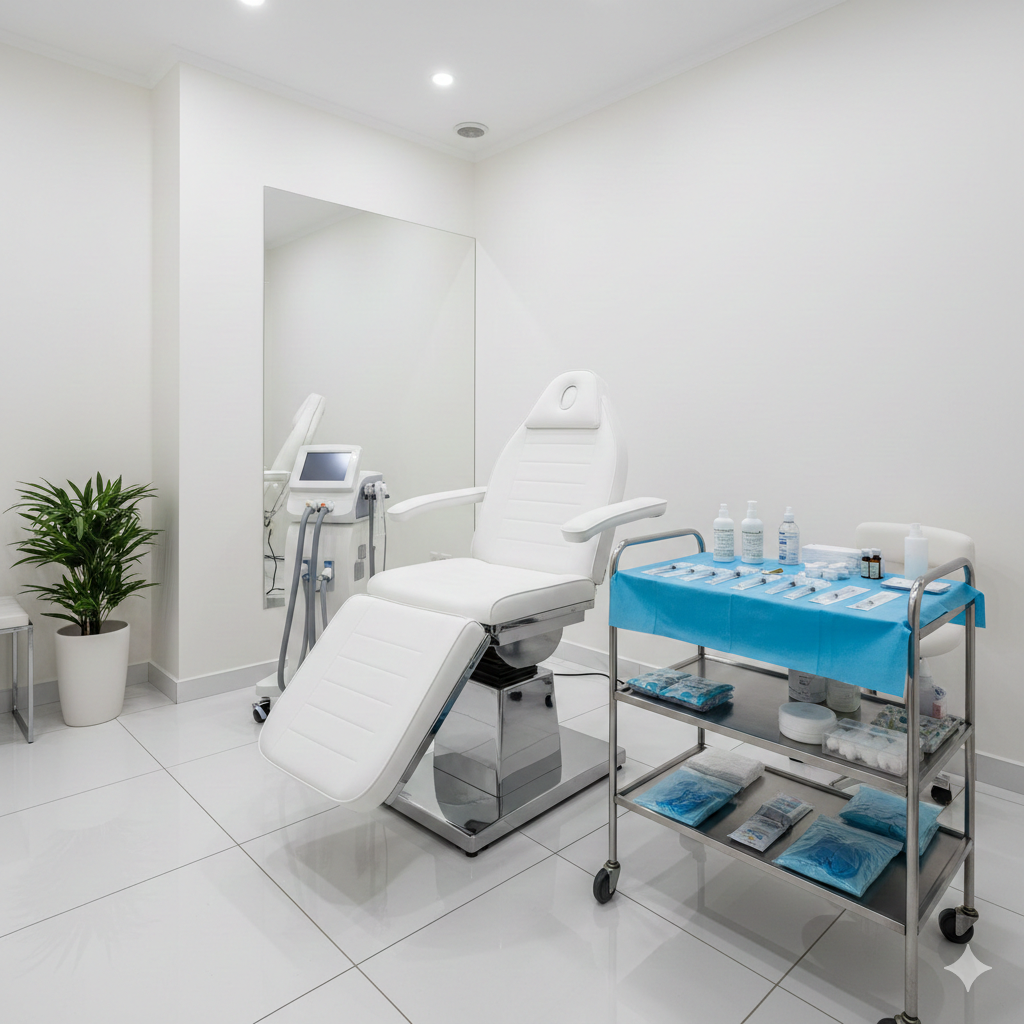
Essential items for an injectable-focused aesthetic practice include appropriate examination and treatment chairs or beds that provide patient comfort and practitioner ergonomics. Quality lighting with adjustable intensity and positioning to properly assess facial anatomy and treatment areas. Medical-grade refrigeration for proper storage of dermal fillers and other temperature-sensitive products. Sharps disposal containers and biohazard waste management systems to maintain safety and regulatory compliance. Basic emergency equipment including appropriate medications and equipment for managing potential adverse reactions. And comprehensive insurance coverage including professional liability insurance appropriate for aesthetic procedures.
Nice-to-have items that can wait for later investment include advanced imaging systems for treatment documentation and marketing, though good quality photography equipment is important. Laser or energy-based devices that require substantial capital investment and specialized training. Extensive aesthetic skincare retail inventory that ties up capital before you understand your patient preferences. Premium office furniture and high-end interior design that exceeds functional requirements. And sophisticated practice management software beyond basic scheduling and patient record systems that you may not fully utilize initially.
The goal is launching with sufficient capability to deliver excellent service while preserving capital for marketing, working capital, and unexpected expenses that inevitably arise during startup phases. Many successful practices begin modestly and reinvest profits into expanded capabilities once they’ve established steady patient flow and validated demand for various services.
Building Your Dermal Filler Portfolio: Strategic Product Selection
Your initial dermal filler inventory represents one of your most important startup decisions. The products you stock determine which treatments you can offer, influence your pricing structure, affect your working capital requirements, and shape patient perceptions of your practice. New practitioners should resist the urge to stock every available product, instead focusing on building a carefully curated portfolio that covers essential applications efficiently.
A strategic starter portfolio for dermal fillers might include products for fine lines and superficial wrinkles, typically a low-viscosity hyaluronic acid filler suitable for perioral lines, crow’s feet, and other delicate areas. Midface volume restoration products with medium viscosity and cohesivity for cheeks, nasolabial folds, and general facial contouring. Lip enhancement options specifically designed for lip augmentation with appropriate characteristics for this visible and demanding application. And possibly deep volumizing products for structural support, chin augmentation, and jawline definition if your practice will focus on comprehensive facial contouring.
Rather than stocking multiple brands for each category, new practices often benefit from selecting one or two reliable product lines that cover most applications. This simplified approach reduces inventory complexity, deepens your familiarity with specific products, and often enables better pricing through volume concentration. As your practice grows and patient preferences become clear, you can expand your portfolio strategically based on actual demand rather than speculation.
Consider starting with established brands that have strong clinical evidence and wide market acceptance. While premium European brands offer the security of long clinical history, quality Korean alternatives can provide excellent results at lower cost points, enabling more competitive pricing or better margins. The key is selecting products that you can use confidently and that meet quality and safety standards appropriate for your market.
Initial Investment Costs and Realistic ROI Timelines
Understanding the financial requirements for starting an aesthetic practice helps set realistic expectations and secure adequate funding. While costs vary significantly based on location, scope of services, and space requirements, typical startup budgets for injectable-focused practices range from 50,000 to 150,000 euros for a well-equipped single-practitioner operation.
Major cost categories include facility costs encompassing deposits, renovations, and initial rent, often 15,000-40,000 euros depending on location and condition. Equipment and furniture including treatment chairs, refrigeration, lighting, and office basics, typically 10,000-25,000 euros. Initial product inventory for dermal fillers, neurotoxins if offered, and supporting supplies, often 15,000-30,000 euros. Licensing, insurance, and legal setup including professional liability insurance, business formation, and regulatory compliance, usually 5,000-15,000 euros. Marketing and branding covering website development, photography, initial advertising, and promotional materials, typically 8,000-20,000 euros. And working capital to cover operational expenses during the ramp-up period before revenue stabilizes, ideally 10,000-25,000 euros or more.
ROI timelines vary widely based on market conditions, competition, marketing effectiveness, and practitioner reputation. Most new aesthetic practices should plan for 12-24 months to reach break-even, with profitability building gradually thereafter. Practices with established patient bases from previous employment may accelerate this timeline significantly, while practitioners entering saturated markets without existing relationships may require longer runway periods.
Financial planning should account for the reality that many aesthetic practices experience seasonal fluctuations and slower initial months as marketing efforts gain traction. Undercapitalization ranks among the most common causes of startup failure, so securing adequate funding to sustain operations through the growth phase proves essential. Conservative financial projections that assume slower initial growth than you hope for provide a safer foundation for planning.
Wholesale vs. Retail Purchasing: Understanding Your Options
New practices must decide how to source their dermal fillers and other injectables, with the choice between retail and wholesale purchasing having significant implications for costs, inventory management, and operational efficiency. Retail purchasing through local distributors or pharmacy channels offers simplicity and minimal order requirements but typically comes with substantially higher per-unit costs that compress profit margins, particularly during startup when volume is limited.
Wholesale purchasing provides better economics but requires larger minimum orders and, typically, business verification. Many new practices benefit from establishing wholesale accounts with suppliers like Bioresus to reduce per-unit costs from the start. While wholesale minimums might seem daunting, the savings on each unit quickly justify the larger initial investment. For example, saving 20-30% on product costs that represent 30-40% of treatment revenue substantially improves practice margins.
When evaluating wholesale suppliers, new practices should consider several factors beyond just pricing. Minimum order requirements and how they align with your projected usage over reasonable timeframes. Product selection breadth and whether one supplier can fulfill most of your needs, simplifying ordering and relationships. Compliance documentation and the supplier’s ability to provide certificates, batch tracking, and regulatory support. Payment terms and whether they offer credit or require upfront payment, impacting your working capital needs. Reliability and reputation within the industry, often verifiable through professional networks and online research. And customer service quality, particularly responsiveness to questions and issues that inevitably arise as you establish your practice.
Some new practitioners choose a hybrid approach, maintaining retail relationships for immediate needs while building toward wholesale purchasing as volume increases. This transitional strategy can work but often results in paying premium prices during the critical startup phase when every euro matters most. If your business plan projects sufficient volume to justify wholesale minimums within your first few months, establishing wholesale relationships from the start typically proves more economical.
Storage and Shelf Life Management
Proper storage of dermal fillers and other aesthetic injectables protects your investment and ensures product efficacy. Most hyaluronic acid fillers require refrigeration at 2-8 degrees Celsius, making medical-grade refrigeration non-negotiable for any practice stocking these products. Consumer refrigerators lack the temperature stability and monitoring capabilities needed for medical products, making them unsuitable despite lower costs.
Temperature monitoring proves essential, with many practices using digital systems that log temperatures continuously and alert staff to any deviations. This documentation protects you in the event of equipment failure and demonstrates compliance with storage requirements to regulators and insurers. Never use products that have been stored outside manufacturer-specified temperature ranges, even if the deviation was brief.
Shelf life management requires systematic attention to prevent waste from expired products. Implement first-in-first-out (FIFO) inventory rotation, placing newly received products behind existing stock. Track expiration dates in your inventory system, setting alerts for products approaching expiration. Consider your ordering patterns relative to product shelf life, balancing the economics of larger orders against the risk of expiration. And if you do discover expired products, dispose of them properly and document the loss for accounting purposes. Never use expired products under any circumstances.
For new practices, product expiration represents a real risk when ordering patterns haven’t stabilized. Start with conservative inventory levels even if it means paying slightly higher per-unit costs, then increase order sizes as you validate actual usage rates. The savings from buying larger quantities vanish entirely if products expire before use.
Building Relationships with Suppliers
Your relationships with suppliers represent strategic assets for your practice, not merely transactional exchanges. Strong supplier relationships provide advantages that extend well beyond product procurement, including preferential pricing as your volume grows, priority allocation during supply shortages, technical support and product training, flexibility during cash flow challenges, early access to new products and technologies, and industry intelligence about market trends and competitive dynamics.
Building these relationships requires professionalism and communication from the start. Pay invoices promptly to establish creditworthiness and trust. Communicate clearly about your needs, growth plans, and any concerns that arise. Be reasonable in your expectations, recognizing that suppliers have their own operational constraints. Provide feedback about products and service, both positive and constructive. And consider suppliers as partners in your practice success rather than mere vendors to negotiate against.
Many suppliers offer additional value through training, marketing support, or practice development resources. Take advantage of these offerings, as they’re often designed specifically to help new practices succeed. The knowledge and support you gain from suppliers can accelerate your practice development significantly, particularly if you’re entering aesthetic medicine from a related but different medical specialty.
Legal and Insurance Requirements
Before purchasing any equipment or products, ensure your legal and insurance infrastructure is properly established. Requirements vary by jurisdiction but typically include appropriate medical licensure for your specific practice scope, business registration and tax identification, professional liability insurance with adequate coverage limits and appropriate scope for aesthetic procedures, general liability insurance for your facility, product liability coverage if not included in professional liability policies, employment law compliance if hiring staff, and health and safety certifications required in your jurisdiction.
Insurance considerations deserve particular attention, as aesthetic procedures carry specific risks that may not be covered under standard medical malpractice policies. Verify that your insurance explicitly covers the procedures you plan to offer, with particular attention to any exclusions for cosmetic or elective procedures. Understand your coverage limits and whether they’re adequate given typical claim values in aesthetic medicine. Review whether your policy covers product liability for the dermal fillers and other products you use. And check whether you need separate coverage for any equipment or technology you plan to use.
Working with insurance brokers experienced in medical aesthetics proves valuable, as they understand the specific coverage needs and can navigate the specialized insurance market for aesthetic practitioners. The cost of comprehensive appropriate insurance may seem substantial during startup, but it’s non-negotiable protection for your personal assets and professional future.
Setting Yourself Up for Long-Term Success
Starting an aesthetic practice represents a significant undertaking that combines medical expertise with business acumen. The equipment and supply decisions you make during startup create the foundation for your practice’s operational efficiency, financial performance, and clinical capabilities. By approaching these decisions strategically—prioritizing essential investments, building relationships with reliable suppliers, implementing proper systems for inventory and compliance, and maintaining adequate capital reserves—you set your practice up for sustainable growth.
Remember that successful practice development is a marathon, not a sprint. Few practices achieve their full potential immediately, and the startup phase inevitably includes challenges and learning experiences. The practitioners who succeed are those who plan carefully, execute systematically, stay adaptable as market realities become clear, and maintain focus on delivering excellent patient outcomes that generate word-of-mouth referrals and build lasting reputation.
Use this guide as a framework for your planning, adapting recommendations to your specific circumstances, market, and professional goals. Seek mentorship from experienced aesthetic practitioners who can share insights from their own startup experiences. Stay engaged with professional organizations that provide continuing education, networking, and industry intelligence. And approach your new practice with both the clinical excellence that serves patients and the business discipline that ensures long-term sustainability.