

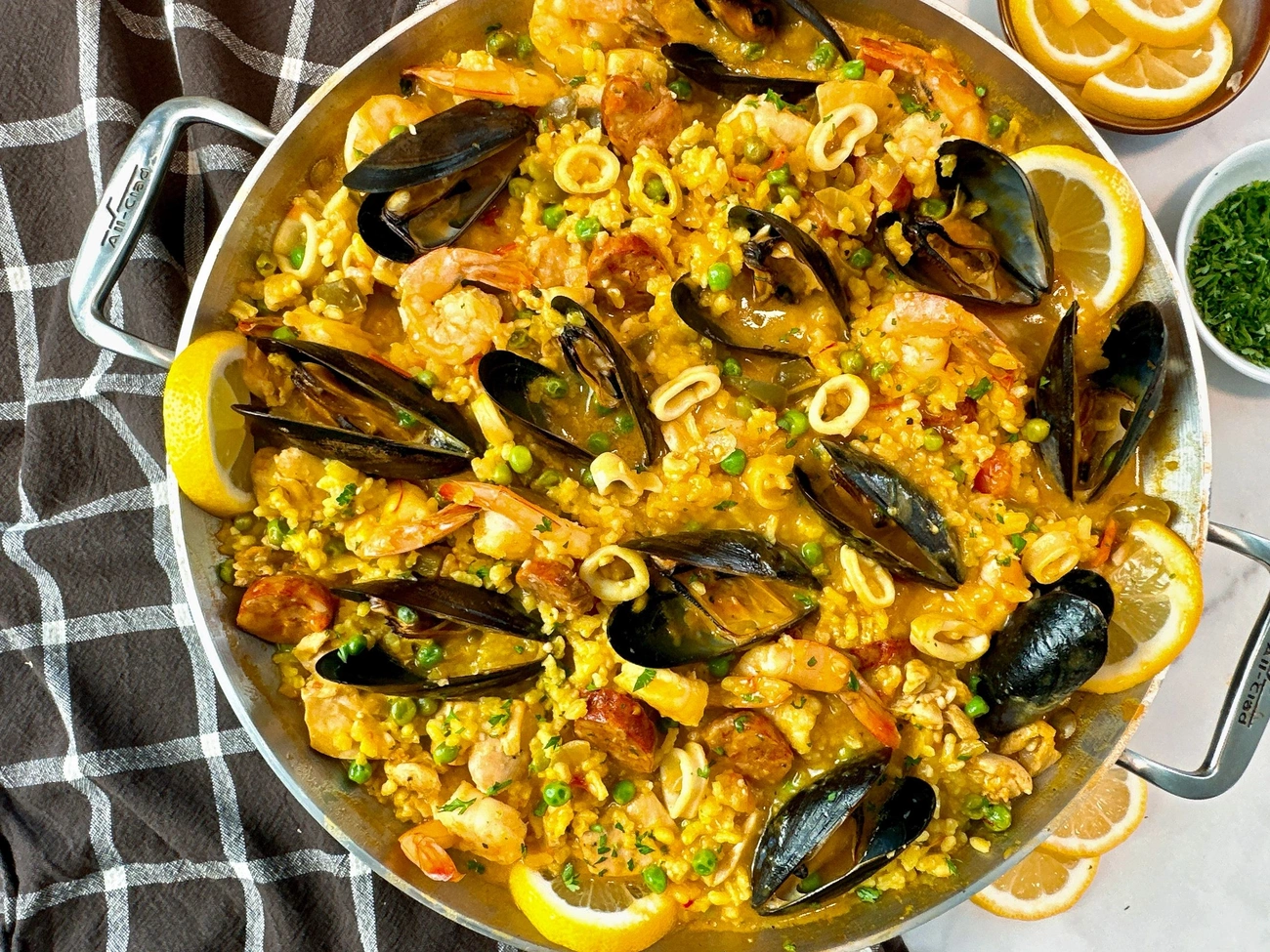

What is Paella?
The story of paella begins in Spain’s Valencia region along the eastern Mediterranean coast. This classic Spanish rice dish gets its name from the paellera – a wide, shallow pan with two handles where cooks traditionally prepare and serve it. People worldwide know this saffron-flavored rice dish as “pai·ei·uh” or “pä-ˈā-yə,” and it stands as Spain’s most celebrated culinary creation.
Rice serves as the heart of paella, cooked golden with saffron and mixed with proteins and vegetables. Recipes differ across regions, but the basics never change: short-grain rice, saffron, olive oil, and rich broth create the magic. Wood fire cooking adds substantially to paella’s unique taste.
The main types of paella include:
- Paella Valenciana: The original version, typically containing chicken, rabbit, sometimes duck, snails, green beans, and lima beans.
- Paella de Marisco: Seafood paella that replaces meat with various seafood like shrimp, mussels, clams, and squid.
- Paella Mixta: A combination of meat and seafood, sometimes called Paella Andaluz.
- Paella Vegetariana: A vegetable-based version without meat or seafood.
- Paella Negra: Distinctively cooked with squid ink, giving it a black color.
Expert cooks prize the socarrat—a crispy layer of rice at the pan’s bottom. This slightly burnt, caramelized crust shows the cook’s skill in striking the perfect balance between well-cooked and burnt rice.
Authentic paella calls for bomba rice, a short-grain variety that soaks up flavors while keeping its shape, though Valencia’s cooks also commonly use senia rice. Saffron brings the traditional color and flavor, but some cooks turn to turmeric or calendula as alternatives.
Paella’s journey from a simple farmers’ meal in Valencia to Spain’s national dish shows its incredible evolution. Spanish restaurants traditionally serve paella on Thursdays, which proves its deep cultural roots beyond just being food.
This beloved rice dish showcases Spanish cooking’s ingenuity. Local ingredients shape regional versions while the dish’s core identity remains strong.
Where did Paella come from?
Valencia, Spain, with its rich agricultural heritage and ideal conditions for rice cultivation, marks the birthplace of paella. The Moors brought rice to the area and started growing it in the Albufera wetlands at the time of the eighth century. This started a thousand-year connection between Valencia and rice production that would create Spain’s most iconic dishes.
Paella started as a simple meal, quite different from the sophisticated dish we know today. Rice farmers in the Albufera region created this dish during the 15th century. These workers needed substantial food during their workday, so they made a practical one-pot meal with ingredients from the surrounding fields: rice, snails, aquatic birds, green beans, and water from the Albufera lake.
The dish served as a shared lunchtime meal for farmers and agricultural workers who collected ingredients around the rice fields. Early versions typically contained water vole meat, eels, and butter beans. Living standards improved in the late 19th century, and the ingredients changed to include rabbit, chicken, duck, and maybe even snails.
The term “paella” actually names the wide, shallow traditional pan used to cook the dish over an open fire. Language experts believe this word comes from the Latin “patella,” meaning “pan”. A Spanish newspaper first used “paella” to describe the recipe instead of just the cooking vessel in 1840.
Paella’s cultural importance reaches way beyond the reach and influence of just food. The dish became a social occasion where farmers connected with friends and family while orange wood burned and oil sizzled in the air—a tradition that lives on in Valencia today. This meal represents a perfect blend of Roman culture (which contributed the cooking utensil) and Arabic influence (which brought rice cultivation).
Valencians started using calderos to cook rice outdoors in their orchards near lake Albufera during special occasions by the 18th century. Social changes in the late 19th century led to more gatherings and outings in the countryside, making paella the centerpiece of social meals.
The Albufera lagoon sits about 11 kilometers south of central Valencia and stands as the “cradle of Valencian paella”[63]. This freshwater ecosystem created the perfect setting for rice cultivation and helped develop paella’s unique cooking methods and flavors.
Types of Paella

Image Source: Serious Eats
Paella has evolved through centuries into several distinct variations across Spain. Each version has its own characteristic ingredients that reflect local priorities and what’s readily available in different regions. These variations keep the dish’s core elements while creating unique flavor profiles.
Paella Valenciana
The original and most authentic version of this iconic dish comes from Valencia. This traditional preparation has rabbit, chicken, sometimes duck, and even snails as protein sources. The vegetables usually include ferradura (as with Romano beans), garrofó (fresh white beans), tomatoes, and artichoke hearts when in season. Saffron gives the dish its golden color, though some cooks use turmeric or calendula instead. The authentic version excludes seafood and sticks to land-based ingredients. Valencians see this recipe as the gold standard that defines what paella should be.
Seafood Paella
Coastal regions gave birth to seafood paella, known as paella de marisco or paella marinera. Fishermen replaced traditional meat with their daily catch. This version showcases shrimp, mussels, squid, clams, and fish – typically served in their shells. Ocean flavors spread through the rice to create a distinct maritime taste. The seafood’s natural flavors take center stage here, unlike the Valencian version that uses beans and green vegetables.
Mixed Paella
Mixed paella (paella mixta) brings together flavors from land and sea, with chicken and seafood like shrimp and mussels sharing the pan. People call it preparación barroca (baroque preparation) because it combines so many ingredients. This version has become the most recognized worldwide. In spite of that, Valencia’s purists reject this combination as inauthentic, even though more people enjoy it now. This adaptation shows how paella changed as it moved beyond its birthplace.
Vegetarian Paella
Modern dietary trends have led to vegetarian paella (paella vegetariana or paella de verduras). This version swaps animal proteins for colorful vegetables like artichokes, asparagus, mushrooms, bell peppers, tomatoes, green beans, and olives. The dish stays true to its roots through traditional cooking methods and key ingredients like saffron, paprika, and bomba rice. Some versions add chickpeas or beans for protein. While it breaks from tradition, vegetarian paella keeps the dish’s heart intact – perfectly cooked rice grains and that prized socarrat (crispy bottom layer).
How is Paella traditionally cooked?

Image Source: Spain on a Fork
Traditional paella preparation uses specific cooking techniques passed down through generations. These methods boost the dish’s distinctive flavor and texture by a lot. The authentic cooking process includes three elements: an open fire heat source, a specialized pan, and a prized crispy bottom layer.
Cooking over open fire
A wood fire creates the most authentic Spanish paella. Valencian cooks prefer orange branches as fuel. These branches create a unique aroma that adds to the final flavor. Fire management plays a vital part. The cook starts with medium heat to cook meats and vegetables. Strong flames come next when adding stock. The flames should reach the pan’s sides. The final stage needs just embers.
The paella pan sits on a wrought iron tripod about 30 centimeters above ground. Cooks can control the heat by adding wood or moving embers as needed. The broad, even heat from an open fire solves the biggest problem of uneven cooking on standard stovetops. This method ensures the rice cooks evenly throughout the pan.
Using a paella pan
The paella pan (paellera) helps cook rice perfectly. These pans feature wide, shallow designs with sloping sides and two handles. Polished carbon steel makes up most of these pans. The material transfers heat fast and cools quickly. The pan’s design serves one purpose – it lets rice cook in a thin layer about as wide as your finger (roughly 1/2 inch).
Traditional pans have a slightly concave bottom with small dimples. This shape maximizes rice contact with the bottom surface where flavors develop best. The carbon steel pans develop a special coating over time. Valencians value this coating’s unique flavor. The pan needs oiling after each use to stop rust.
Creating the socarrat
The socarrat makes authentic paella special. This caramelized, crispy rice layer forms at the pan’s bottom. You need perfect technique and timing to create it. The golden rule? Never disturb the rice once it’s in the pan.
Perfect socarrat needs the right moisture balance. Too much liquid makes mushy rice. Too little leaves rice burnt outside but raw inside. Heat control matters a lot. Start with medium-high heat, then switch to low when most liquid disappears. Expert cooks listen for crackling sounds and smell for toasted, nutty aromas. These signs show the socarrat is forming right.
Family tradition often saves this crispy layer for the eldest family member (abuelo) at the meal. This custom shows how much everyone values this part of the dish.
What ingredients are used in Paella?
The secret to authentic paella lies in choosing ingredients that give it its unique character. Short-grain rice is the life-blood of this iconic dish, with Bomba rice being the most sought-after variety. This special rice can absorb three times its volume in water and still stay firm. It expands sideways instead of lengthwise while cooking. You can also use Senia, Bahia, or Calasparra rice, which have similar properties.
Saffron is a vital ingredient that gives paella its golden color and unique aroma. This spice costs more than gold by weight, but you only need a tiny amount to flavor the entire dish. Turmeric or calendula sometimes work as alternatives if saffron isn’t available.
Extra virgin olive oil is another key component that creates the base to cook proteins and vegetables. The dish starts with aromatics like onions, garlic, and tomatoes, along with bell peppers.
A traditional Valencian paella combines chicken, rabbit, sometimes duck, and even snails. The seafood versions feature shrimp, mussels, clams, squid, and fish. Many authentic recipes include local vegetables such as ferradura (flat green beans), garrofó (butter beans), and artichokes in season.
The right seasoning is significant, and paprika (sweet or smoked) often accompanies saffron. Some recipes add rosemary branches to enhance the aroma, especially when you have snails in the mix. Modern versions might include chorizo, though traditionalists strongly oppose this addition.
Mushrooms, zucchini, and chickpeas are common protein substitutes in vegetarian versions. Whatever variations you choose, using quality ingredients – especially rice and saffron – makes all the difference in creating an authentic paella experience.
How Paella became a global dish
Paella exceeded its Valencian roots and became a worldwide sensation in the 20th century. Spanish cuisine caught international attention when tourists started exploring it in the mid-20th century, and paella quickly spread throughout Spain. Regional ingredients from different cultures revolutionized this simple rural meal into the diverse, globally celebrated dish we know today.
Local influences naturally shaped paella recipes as they spread beyond Spain. The dish’s popularity soared online, becoming the fourth most searched food item on the internet by 2015. Global searches for “paella” jumped by 48% in 2017, reaching about eight million annual searches.
Each continent has created its own unique take on paella. Filipino cooks make “arroz a la valenciana” with sticky rice. Argentina’s “paella criolla” features beef as its star ingredient. Cuban chefs add their local specialties, while Chilean versions incorporate corn and potatoes. Italian adaptations embrace Mediterranean flavors with olives and sun-dried tomatoes. Mexican versions feature poblano peppers that add a distinctive kick.
Today’s paella includes fusion recipes that blend different culinary traditions. Vegetarian and vegan versions cater to modern dietary priorities. Notwithstanding that, purists—particularly Valencians—insist authentic paella should follow traditional recipes. They view additions like chorizo or peas as controversial departures from their cherished tradition.
FAQs
Q1. What are the essential ingredients in authentic paella? Authentic paella typically includes short-grain rice (preferably Bomba rice), saffron for color and flavor, olive oil, and a variety of proteins and vegetables. Traditional Valencian paella often contains chicken, rabbit, snails, green beans, and artichokes, while seafood variations include shrimp, mussels, and squid.
Q2. How is paella traditionally cooked? Paella is traditionally cooked over an open wood fire in a wide, shallow pan called a paellera. The dish is cooked without stirring once the rice is added, allowing a crispy bottom layer called socarrat to form. This method ensures even heat distribution and contributes to the dish’s distinctive flavor.
Q3. What makes paella different from other rice dishes? Paella stands out due to its cooking method, specific ingredients, and cultural significance. The use of saffron, the wide shallow pan, and the formation of socarrat are unique features. Additionally, paella is often a communal dish, traditionally prepared for large gatherings and special occasions.
Q4. Are there different types of paella? Yes, there are several types of paella. The most traditional is Paella Valenciana, but other popular variations include Seafood Paella (Paella de Marisco), Mixed Paella (Paella Mixta), and Vegetarian Paella. Each type has its own combination of ingredients, though all maintain the core elements of rice, saffron, and the characteristic cooking method.
Q5. How has paella evolved as it gained global popularity? As paella spread beyond Spain, it adapted to local tastes and available ingredients. While purists may insist on traditional recipes, many international versions incorporate regional elements. This global adaptation has led to creative variations, though some argue that these deviate too far from authentic paella. Despite this, paella’s popularity continues to grow, with millions of people searching for recipes online each year.