

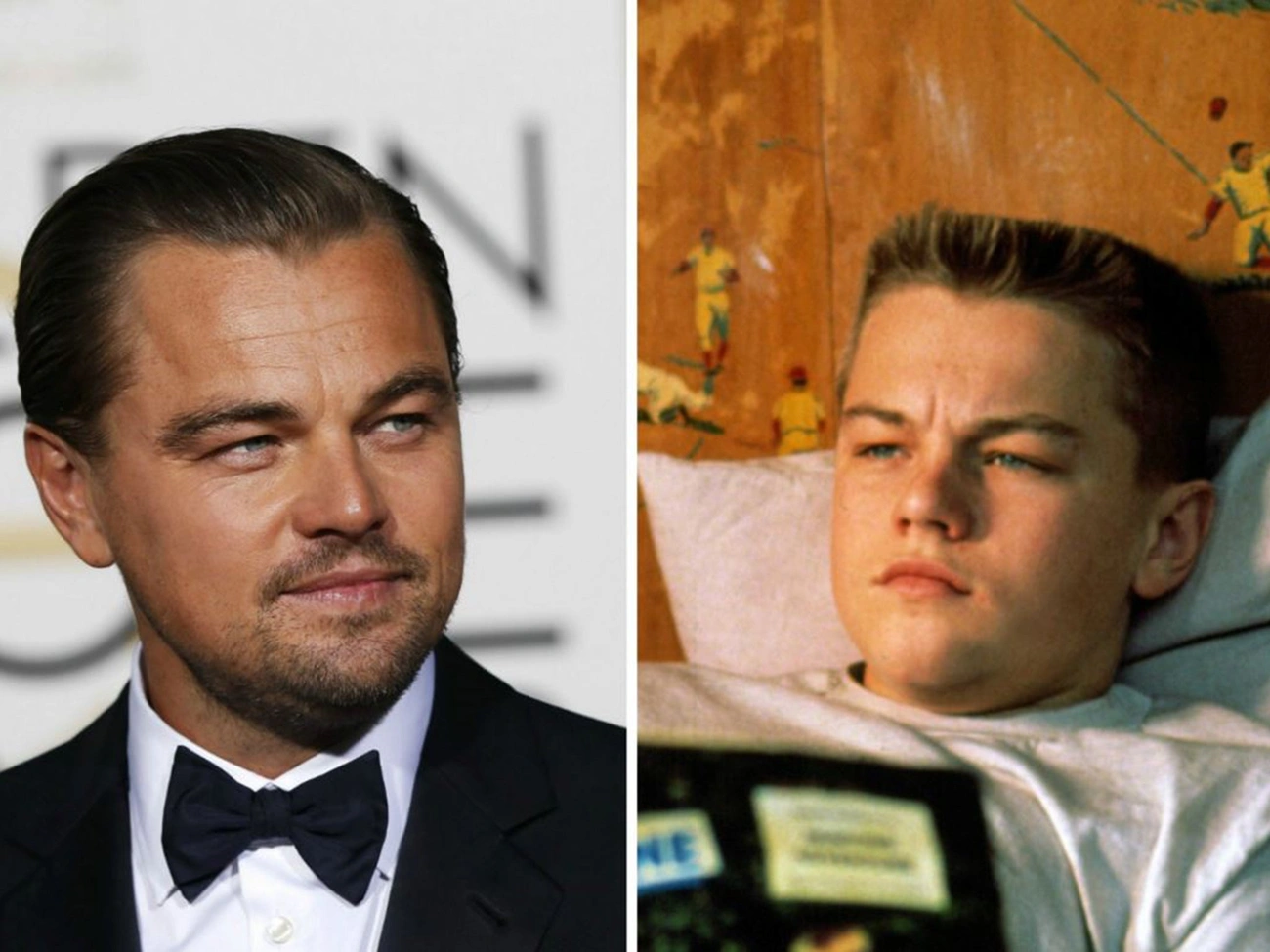

Leonardo DiCaprio’s movies have brought in a staggering $7.2 billion at the worldwide box office as of 2019. He commands $20 million per movie now and ranks among Hollywood’s top earners, making it to the world’s highest-paid actors list eight different times. The sort of thing I love about his career isn’t just his success – it’s the famous roles he chose not to take.
His filmography showcases unforgettable performances, but most people don’t know how different it could have been. DiCaprio’s careful selection of roles has proven to be a winning strategy. After six Academy Award nominations, he finally grabbed the Best Actor Oscar for “The Revenant” (2015). His partnership with Martin Scorsese has given us six remarkable films, including “The Departed,” “The Wolf of Wall Street,” and their latest collaboration “Killers of the Flower Moon” (2023).
This piece will get into the famous roles DiCaprio passed on and the reasoning behind these pivotal decisions. His choices as one of Hollywood’s most selective actors have altered the map of modern cinema, from superhero blockbusters to sci-fi phenomena.
Early Career and First Big Breaks
Leonardo DiCaprio started his trip to stardom at just five years old on the children’s television show Romper Room. His early days weren’t easy. He almost quit acting because he couldn’t find steady work, but his father pushed him to keep going.
From commercials to ‘Growing Pains’
The young actor’s determination paid off as he landed roles in about 20 television commercials. A talent agent once suggested he should change his name to “Lenny Williams” to sound more American – advice that the young DiCaprio smartly turned down.
Success in television soon followed with spots on shows like The New Lassie and Roseanne. His work in the dramatic comedy Parenthood earned him his first Young Artist Award nomination. The big TV break came in 1991 when he joined Growing Pains as homeless teenager Luke Brower.
Ashley Johnson, his Growing Pains co-star, remembered it well: “He was so good… I just remember everyone was like, ‘This kid is so good.’ Like, he had it. We felt it”. The show ended shortly after DiCaprio came aboard, but his performance still grabbed another Young Artist Award nomination.
Breakthrough with ‘This Boy’s Life’ and ‘Gilbert Grape’
DiCaprio’s life changed in 1993 when he beat 400 other hopefuls to star with Robert De Niro in This Boy’s Life. He later talked about the moment that sealed the deal: “I screamed at him at the top of my lungs”.
That same year brought what many call his first standout role in What’s Eating Gilbert Grape, where he played Arnie Grape, a developmentally disabled teenager. He watched and learned from children with similar conditions to nail the part. His hard work showed as he captured both Arnie’s “windmilling joy” and “semi-awareness that the world has somehow left him behind”.
The New York Times raved about his work: “The film’s real show-stopping turn comes from Mr. DiCaprio… The performance has a sharp, desperate intensity from beginning to end”. DiCaprio earned his first Academy Award nomination for Best Supporting Actor at just 19, proving he was much more than just another good-looking young star.
Famous Roles Leonardo DiCaprio Turned Down

Image Source: TheThings
Leonardo DiCaprio’s career stands out not just for his achievements but also for the famous roles he chose to pass up. His path to stardom shows how he stayed selective about his characters and often said no to big blockbusters while looking for more challenging artistic roles.
1. Spider-Man in Sam Raimi’s Trilogy
James Cameron first thought about DiCaprio for Peter Parker, and later Sam Raimi’s team reached out to him again. DiCaprio said he “didn’t feel ready to put on that suit yet”. His close friend Tobey Maguire got the role, and some reports say DiCaprio actually suggested Maguire for the part.
2. Anakin Skywalker in ‘Star Wars: Attack of the Clones’
DiCaprio met with George Lucas about playing the future Darth Vader but said he “just didn’t feel ready to take that dive”. He chose to work with Martin Scorsese on “Gangs of New York” instead, and Hayden Christensen landed the role.
3. Robin in ‘Batman Forever’
People thought he screen-tested for Dick Grayson, but DiCaprio cleared things up: “I never screen-tested. I had a meeting with Joel Schumacher… but didn’t want to play the role”. Chris O’Donnell became Batman’s famous sidekick.
4. Patrick Bateman in ‘American Psycho’
DiCaprio was set to play Patrick Bateman with a reported $15 million offer but left the project. Screenwriter Guinevere Turner said feminist Gloria Steinem supposedly warned him that the role might push away his “13-year-old girl” fans after “Titanic”. Christian Bale took on what became an iconic role.
5. Dirk Diggler in ‘Boogie Nights’
This might be the one that got away. DiCaprio couldn’t play adult film star Dirk Diggler because of “Titanic”. Later he admitted: “My biggest regret is not doing ‘Boogie Nights.’ It was a profound movie of my generation”. Mark Wahlberg gave the breakthrough performance instead.
6. Neo in ‘The Matrix’
Right after “Titanic,” DiCaprio said yes to playing Neo but changed his mind because “he didn’t want to do a visual effects film directly after Titanic”. Keanu Reeves stepped in and created one of cinema’s most memorable characters.
7. Max in ‘Hocus Pocus’
DiCaprio turned down “more money than [he] ever dreamed of” to play Max Dennison. Director Kenny Ortega remembered DiCaprio explaining his focus was on “What’s Eating Gilbert Grape” and another De Niro project. Omri Katz played Max in the end.
8. Steve Jobs in ‘Steve Jobs’
DiCaprio talked with director Danny Boyle about the biopic but stepped away from playing the Apple co-founder. Reports indicate he planned “to take a lengthy break from acting” after making “The Revenant”. Michael Fassbender became Jobs in the final film.
Why He Said No: The Thinking Behind the Rejections
DiCaprio’s selective approach to roles shows a methodical career strategy rather than mere chance. His choices reflect core professional values that built his artistic identity.
Avoiding typecasting and teen idol roles
Titanic launched him to global stardom, and DiCaprio made conscious efforts to distance himself from the heartthrob image. “I have no connection with me during that whole Titanic phenomenon,” he stated, adding, “I’ll never reach that state of popularity again, and I don’t expect to”. The need to escape the “teen idol” trap drove many of his decisions. “I hate this whole hunk thing! I feel when I see myself in that, and these other cute faces, that I’m just part of this meat factory,” DiCaprio confessed.
Preferring character depth over franchise fame
DiCaprio stands apart from other Hollywood stars by choosing artistic merit over commercial success. He stayed away from superhero franchises and blockbuster series because he wanted meaningful performances. “For an ISFP, art is about personal expression, not external success,” noted one analysis of his personality. DiCaprio’s selection process was simple: “I read a script and I say, ‘Woah, I am emotionally engaged in this'”.
Concerns about script quality or direction
Creative differences with filmmakers led to several rejections. DiCaprio left American Psycho after “disagreements with Oliver Stone on the film’s direction”. He turned down The Matrix because “he didn’t want to do a visual effects film directly after Titanic”.
Waiting for the right collaborations
DiCaprio saved his best work for directors he truly admired. Martin Scorsese became the filmmaker who “saved me. I was headed down a path of being one kind of actor, and he helped me become another one”. This careful selection resulted in six acclaimed leonardo dicaprio movies under Scorsese’s direction.
How These Choices Shaped His Career

Image Source: IndieWire
DiCaprio took a different path by turning down mainstream blockbusters. His calculated risks paid off and shaped one of his generation’s most respected acting careers.
Focusing on auteur-driven films
DiCaprio chose to work with visionary filmmakers. This helped keep his work “artistically rigorous but also culturally meaningful”. His selective approach differs from many other actors who take more roles. Since 1997, DiCaprio has appeared in merely 20 films. During this same time, Matt Damon starred in 52 films while Christian Bale appeared in 36.
Building a serious acting reputation
After Titanic, DiCaprio “wanted to show he was a serious actor who could do big, serious parts”. This drive shaped his future choices. In fact, DiCaprio “has not made a really bad or dull film in more than 10 years—not something you can say of Tom Hanks or Tom Cruise or Will Smith”.
Working with Scorsese, Nolan, and Tarantino
DiCaprio’s partnership with Scorsese stands as his most important professional relationship. They made six feature films together that got 31 Academy Award nominations. Their work earned both critical praise and financial success, bringing in £1.03 billion across five features.
On top of that, DiCaprio worked with Quentin Tarantino on Django Unchained and Once Upon a Time in Hollywood. The latter got 10 Oscar nominations. His role in Christopher Nolan’s Inception added another layer to his acting range.
Winning an Oscar for ‘The Revenant’
DiCaprio won his first Oscar in 2016 after five previous nominations. His physically demanding role in The Revenant showed his dedication to acting. When accepting his award, DiCaprio thanked Scorsese “for teaching me so much about the cinematic art form“. This moment highlighted how his careful choice of collaborations shaped his artistic path.
Conclusion
Leonardo DiCaprio’s career is a perfect example of picking roles strategically. His trip from child actor to Oscar winner shows how turning down major roles actually shaped his success. Most actors rush to join blockbuster franchises, but DiCaprio focused on artistic growth and avoided being typecast after his teen idol phase.
At first glance, his decision to pass on roles like Spider-Man, Anakin Skywalker, and Neo might seem strange. These choices let him build a career full of complex, challenging characters instead of getting tied down to franchises. He chose artistic credibility over quick commercial success.
His partnerships with visionary filmmakers proved this approach worked brilliantly. Through collaboration with Martin Scorsese across six films, he evolved from a heartthrob to a respected actor. Working with directors like Tarantino and Nolan showed off his impressive range even more.
DiCaprio’s career shows that being patient and selective leads to better rewards than jumping at every big chance. After five nominations and years of careful choices, he won his Oscar for “The Revenant.”
He charted his own path in an industry that pushes actors toward safe choices. The roles he turned down shaped his legacy just as much as the ones he took. Even if he sometimes wonders about wearing Spider-Man’s suit or entering The Matrix, his work speaks volumes – carefully chosen, consistently excellent, and ended up being extraordinary.
FAQs
Q1. What famous movie roles did Leonardo DiCaprio turn down? Leonardo DiCaprio turned down several iconic roles, including Spider-Man in Sam Raimi’s trilogy, Anakin Skywalker in “Star Wars: Attack of the Clones”, Neo in “The Matrix”, and Patrick Bateman in “American Psycho”. He also passed on playing Steve Jobs in the biopic “Steve Jobs”.
Q2. Why did Leonardo DiCaprio reject these major roles? DiCaprio often turned down roles to avoid typecasting, especially after “Titanic”. He preferred character-driven parts over franchise roles, had concerns about script quality or direction, and waited for collaborations with acclaimed directors. His selective approach aimed to build a reputation as a serious actor.
Q3. How did turning down these roles impact DiCaprio’s career? By being selective, DiCaprio was able to focus on auteur-driven films and build a reputation as a serious actor. This led to collaborations with directors like Martin Scorsese, Christopher Nolan, and Quentin Tarantino. His choices ultimately contributed to his Oscar win for “The Revenant” in 2016.
Q4. What is Leonardo DiCaprio’s approach to selecting movie roles? DiCaprio is highly selective, often choosing roles based on the director and the depth of the character. He looks for emotionally engaging scripts and prefers working with visionary filmmakers. This approach has resulted in a carefully curated filmography of consistently excellent performances.
Q5. Has Leonardo DiCaprio expressed regret over any roles he turned down? DiCaprio has mentioned that his biggest regret was turning down the role of Dirk Diggler in “Boogie Nights”. He once stated, “My biggest regret is not doing ‘Boogie Nights.’ It was a profound movie of my generation.” However, he generally stands by his career choices.