


The Introduction
The Airbus A350 aircraft is one of the most advanced long-haul passenger jets currently operating in commercial aviation. Designed for efficiency, comfort, and long-distance travel, the aircraft is widely used by airlines around the world for international routes.
Airbus developed the A350 to compete with other next-generation wide-body aircraft while delivering improved fuel efficiency and passenger comfort. Today, the aircraft plays an important role in connecting major global cities across continents.
Understanding how the Airbus A350 aircraft works helps explain why many airlines rely on it for ultra-long-haul flights that cross oceans and remote regions.
Development of the Airbus A350
The Airbus A350 program was launched in the mid-2000s as part of Airbus’s strategy to develop a new generation of long-range aircraft.
The aircraft was designed to compete with other modern wide-body jets while incorporating advanced materials and more efficient engines. After years of development and testing, the Airbus A350 entered commercial service in 2015.
Since then, airlines across the world have adopted the aircraft for international routes connecting major cities in:
- North America
- Europe
- Asia
- the Middle East
- Australia
The aircraft quickly became popular due to its combination of fuel efficiency, range, and passenger comfort.
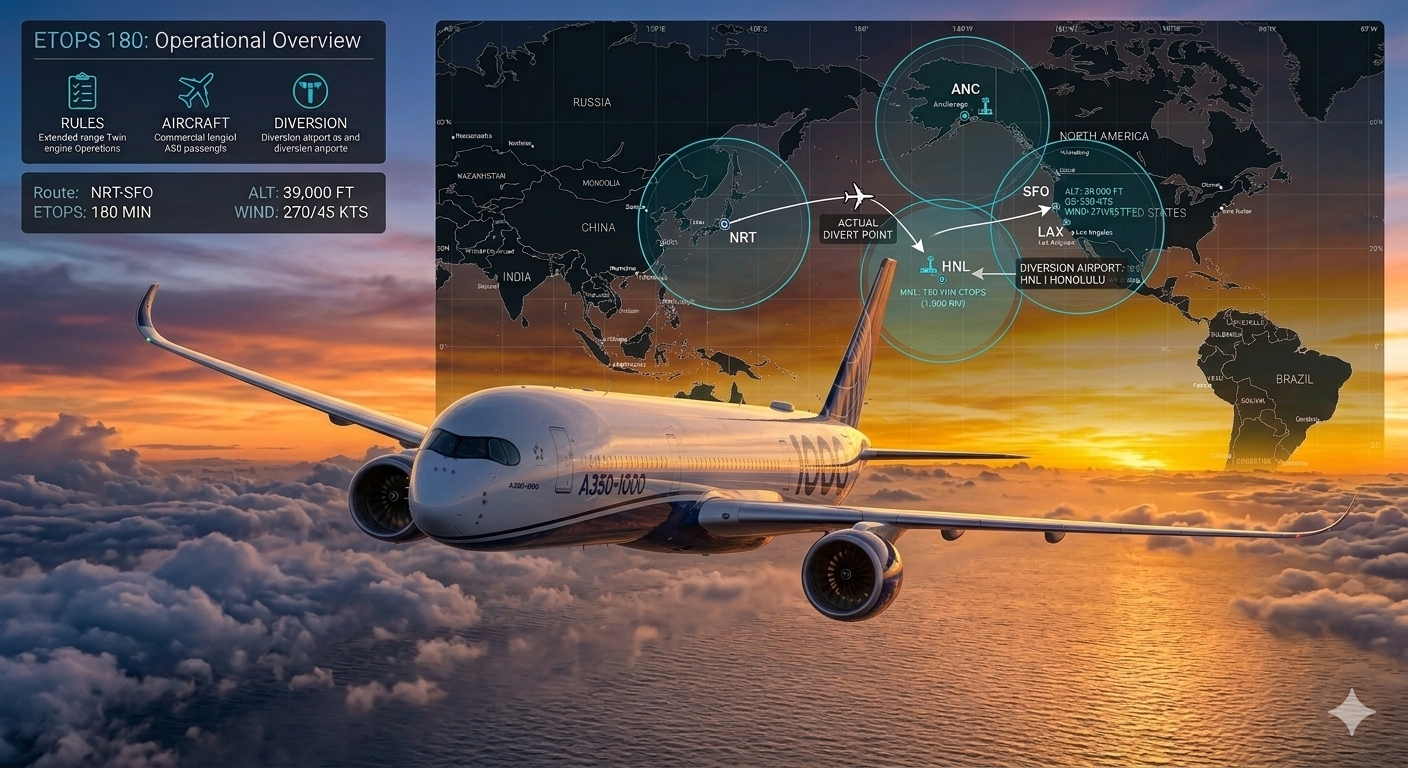
Long-haul aircraft like the A350 operate under strict safety rules such as what is ETOPS in aviation, which determines how far aircraft can fly from diversion airports.
Key Features of the Airbus A350 Aircraft
The Airbus A350 includes several technological improvements compared with older aircraft designs.
One of its most significant innovations is the use of composite materials in the aircraft structure. More than half of the aircraft’s airframe is built from carbon-fiber reinforced materials, which help reduce weight and improve fuel efficiency.
Other advanced features include:
- highly efficient aerodynamic wing design
- advanced flight control systems
- improved cabin pressurization
- quieter engines and reduced noise levels
- modern cockpit technology for pilots
These improvements allow the aircraft to operate long international flights more efficiently than many older aircraft models.
Rolls-Royce Trent XWB Engines
The Airbus A350 aircraft is powered by Rolls-Royce Trent XWB engines, which are among the most efficient large jet engines ever developed.
These engines provide several advantages for airlines, including:
- improved fuel efficiency
- lower carbon emissions
- reduced noise levels
- high reliability during long-haul operations
The engine design also supports the aircraft’s ability to operate under strict long-range operational regulations such as ETOPS.
These capabilities allow the Airbus A350 to perform some of the longest commercial flights in the world.
Airbus A350 Variants
The Airbus produces multiple versions of the A350 aircraft to meet different airline needs.
Airbus A350-900
The A350-900 is the most widely used version of the aircraft.
It typically carries between 300 and 350 passengers, depending on the airline’s seating configuration.
Many airlines use this model for long international routes between major cities.
Technical issues or weather conditions are some of the reasons why flights get diverted during long-haul journeys.
Airbus A350-1000
The A350-1000 is a larger version designed to carry more passengers while maintaining similar range capabilities.
It usually accommodates 350 to 410 passengers depending on the airline’s cabin layout.
This model is often used on high-demand long-haul routes.
Passenger Comfort Improvements
Passenger comfort was a major focus in the design of the Airbus A350 aircraft.
Compared with older aircraft, the A350 includes several cabin improvements designed to make long flights more comfortable.
These include:
- larger passenger windows
- quieter cabin environment
- higher cabin humidity levels
- improved air filtration systems
- LED lighting designed to reduce jet lag
These features help passengers feel less fatigued during long international flights.
Long-Distance Flight Capabilities
The Airbus A350 aircraft is capable of flying extremely long distances without refueling.
Depending on the variant, the aircraft can travel more than 15,000 kilometers (9,300 miles).
This range allows airlines to operate non-stop flights between distant cities such as:
- New York and Singapore
- London and Sydney
- Los Angeles and Tokyo
- Dubai and San Francisco
These long routes demonstrate how modern aircraft technology has transformed global air travel.
The Airbus A350 in Modern Aviation
Today, the Airbus A350 is used by many major airlines around the world.
Its efficiency and long-range capabilities make it ideal for connecting global travel hubs and operating ultra-long-haul routes.
Airlines value the aircraft because it offers:
- reduced operating costs
- improved environmental efficiency
- strong reliability for long-distance flights
- enhanced passenger comfort
As airlines continue expanding international travel networks, the Airbus A350 remains one of the most important aircraft in modern aviation.
Final Thoughts
The Airbus A350 aircraft represents a new generation of long-haul aviation technology. Its advanced engines, lightweight composite structure, and passenger-focused design allow airlines to operate long-distance flights more efficiently than ever before.
From transatlantic journeys to ultra-long-haul routes across the Pacific, the Airbus A350 plays a key role in modern international air travel.
As aviation technology continues to evolve, aircraft like the Airbus A350 will remain essential for connecting people and cities across the globe.
A recent aviation incident involved Delta Flight DL275 diverted LAX after a technical issue occurred during its Detroit-to-Tokyo route.